


Every month, your utility bills land in your inbox or mailbox and most people glance at the total before filing them away. But those numbers tell a story about what’s happening inside your walls, under your floors, and behind your appliances. A sudden spike in electricity, gas, or water usage is rarely random, it’s often the first warning sign of a system that’s beginning to fail. Learning to read these patterns can help you catch problems early, before they turn into expensive emergencies.
Rising Electric Costs and an Aging HVAC System

When your electric bill climbs steadily over several months without a change in your habits or the weather, your heating and cooling system is a likely culprit. As air conditioners and furnaces age, their components work harder to reach the same temperature, pulling more power with less efficiency. A unit that used to cool your home in twenty minutes might now run for an hour, and that extra runtime shows up directly on your statement.
Comparing your current bill to the same month last year is one of the simplest ways to spot this trend. If usage has jumped ten percent or more without an obvious explanation, it’s worth having a technician inspect the system before the problem worsens. Scheduling AC repair at the first sign of rising costs is often far cheaper than waiting for a full breakdown during a heat wave.
- Compare year-over-year bills for the same billing period
- Note any new noises or weak airflow alongside the cost increase
- Check your thermostat settings to rule out simple user error
- Ask your utility provider for a usage history graph if available
Water Bills That Creep Up Without Explanation
A slowly rising water bill is one of the most overlooked warning signs in a home. Unlike a burst pipe, which announces itself immediately, a small leak behind a wall or under a slab can waste gallons every day while staying completely hidden. Over weeks, this shows up as a gradual increase rather than a dramatic spike, which makes it easy to dismiss as normal fluctuation. A single toilet with a worn flapper valve can silently waste 200 gallons a day, while a pinhole leak in a slab foundation might only add a few dollars to each billing cycle at first. Because these increases happen in small increments, most people assume the change is due to weather, houseguests, or watering the lawn more often. That assumption is exactly why leaks go undetected for months, sometimes until drywall warps or a floor feels soft underfoot. The best way to catch this early is to compare bills month over month rather than glancing at the total due. Look specifically at the gallons used, not just the dollar amount, since rate increases from the utility company can mask or mimic a usage spike. If your household size and habits haven’t changed but usage climbs for two or three consecutive cycles, that pattern is worth investigating rather than ignoring. A simple way to confirm a hidden leak is to check the water meter at night after everyone has gone to bed and no fixtures are in use. If the dial is still moving or the digital leak indicator is flashing, water is escaping somewhere in the system even though nothing is visibly running.
To catch this early, take a meter reading before bed and another first thing in the morning without using any water overnight — no flushing, no dishwasher, no laundry running on a delay cycle. If the numbers moved, water is escaping somewhere in your system even when nothing is turned on. Most residential meters have a small triangular or star-shaped leak indicator dial that spins even with the tiniest flow, so watch that too; if it’s turning while every fixture is off, that’s your confirmation. A silent leak of just one gallon per hour adds up to over 700 gallons a month, which is often enough to explain a bill jump of $20 or more without any visible sign of trouble. Toilets are the usual suspects, since a worn flapper valve can leak hundreds of gallons a day without making a sound. A quick way to check is to add a few drops of food coloring to the tank and wait fifteen minutes without flushing; if color shows up in the bowl, the toilet is leaking. This simple test can reveal problems long before they become visible stains or soft spots in your flooring, giving you a chance to fix a cracked pipe or faulty valve while the repair is still cheap and contained.
- Record your water meter reading, wait two hours without using any water, then check it again — any movement means a leak somewhere in the system
- Listen for running water sounds when all fixtures are off, checking near toilets, under sinks, and along visible pipes
- Check your water heater and washing machine connections for dampness, rust, or mineral buildup around hoses and valves
- Look for unusually green or soggy patches in your yard, especially ones that stay wet during dry weather — a sign of an underground line leak
- Watch for a water bill that’s 20% or more above your typical usage with no added household activity to explain it
- Test toilets for silent leaks by adding food coloring to the tank and checking if it seeps into the bowl within 15 minutes without flushing
- Note any drop in water pressure, which can indicate a leak diverting flow before it reaches your fixtures
Gas Bills and the Warning Signs of Appliance Inefficiency
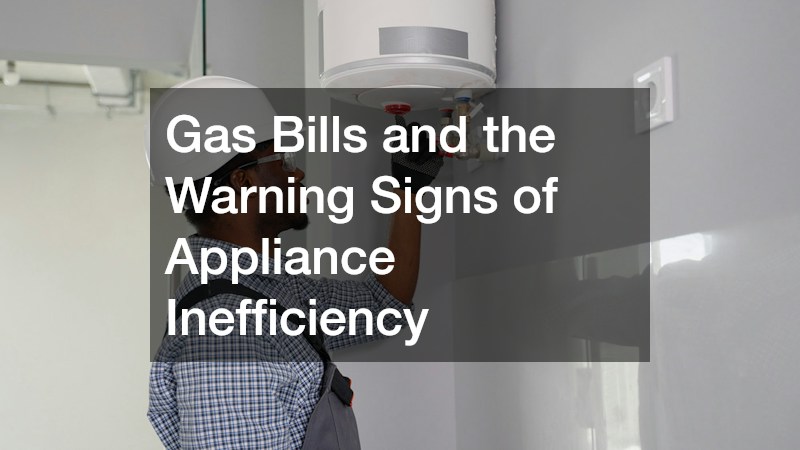
Natural gas bills tend to rise and fall with the seasons, but a spike that doesn’t match colder weather deserves attention. Furnaces, stoves, and especially water heaters can lose efficiency as internal components wear down, forcing them to burn more fuel to produce the same output. A water heater nearing the end of its lifespan often struggles to maintain temperature, cycling on more frequently and consuming more gas in the process.
Most water heaters are built to last between eight and twelve years, and performance typically declines noticeably in the final stretch. If your gas usage is climbing and your unit is approaching or past that age range, a water heater replacement may actually save you money compared to continuing to pay for its inefficiency. Waiting too long can also increase the risk of leaks, which brings its own set of costly repairs.
- Check the manufacturer’s label for your water heater’s installation date
- Watch for inconsistent water temperature throughout the day
- Note any rumbling or popping sounds coming from the tank
- Track whether your gas bill rises even during mild weather
Unexplained Spikes After Heavy Rain or Snow
If you notice your water bill jumping right after a storm, it could point to a plumbing issue that only reveals itself under pressure. Heavy rain can force water into cracked pipes or overwhelm a sump pump, while melting snow sometimes seeps into foundations and triggers basement pumps to run constantly. These seasonal spikes are easy to blame on weather alone, but they often expose a weakness that was already present in your system.
A qualified plumber can pressure test your lines and inspect for the kind of hairline cracks that only leak significantly during heavy use or extreme weather. Catching these issues after one bad storm is far better than discovering them during the next one. Keep a simple log of unusual weather events alongside your utility bills so you can spot the connection more easily.
- Mark your calendar with major storms or snowmelt events
- Compare your water bill from that billing cycle to typical months
- Check basement corners and crawl spaces for standing water after rain
- Inspect exterior spigots and hose connections for drips
Electric Bill Patterns Linked to Insulation and Exterior Damage
Not every spike in your electric bill comes from an appliance. Sometimes the problem is your home’s exterior, allowing conditioned air to escape and forcing your HVAC system to work overtime. Cracked, warped, or missing siding creates gaps where outside air seeps in, undermining your insulation even if everything inside the walls is functioning correctly.
If your energy bills keep rising despite a well-maintained heating and cooling system, it’s worth having your home’s exterior assessed. Siding contractors can identify areas where panels have pulled away, warped from moisture, or developed gaps that let air pass through freely. Addressing these issues often brings immediate, noticeable savings on your monthly energy costs.
- Walk the exterior of your home looking for warped or loose panels
- Check for gaps around windows and doors where siding meets the frame
- Feel for drafts near exterior walls on windy days
- Look for discoloration or soft spots that suggest moisture damage
Tracking Usage Trends With Your Utility Provider’s Tools
Most utility companies now offer online dashboards that break down your usage by day or even by hour, giving you far more insight than a single monthly total ever could. These tools can reveal patterns you’d otherwise miss, like a consistent overnight spike in electricity that suggests a malfunctioning appliance running when it shouldn’t. Taking a few minutes each month to review this data turns your utility bill from a simple expense into a genuine diagnostic tool.
Many providers also offer free or low-cost energy audits that compare your home’s usage to similar properties in your area. If your consumption is consistently higher than your neighbors’, it’s a strong signal that something in your home needs attention. Use this comparison as a starting point for deciding which system to investigate first.
- Sign up for your provider’s online usage portal if you haven’t already
- Set alerts for unusual spikes in daily or hourly consumption
- Request a home energy audit if one is offered in your area
- Keep a simple spreadsheet tracking monthly totals year over year
Your utility bills are more than a monthly expense, they’re an ongoing record of how well your home’s systems are performing. By paying attention to patterns rather than just totals, you can catch small problems while they’re still inexpensive to fix. Start by pulling your last twelve months of statements and looking for trends in electricity, gas, and water use. Acting on what you find now can save you from far bigger repair bills down the road.